
SHOHEI OCHIAI
ARTIST
"F*CK A STRAIGHT LINE"
Shohei Ochiai bends perception through a collision of memory, media, and rebellion. Shaped by Japan’s vibrant pop culture of the ’90s, his creations channel humor, disorder, and saturated energy into a singular visual language. The result is work that feels urgent and electric—an invitation to step inside a mind where past and present blur without boundaries. His practice thrives on tension, where chaos becomes clarity and excess transforms into meaning. In every piece, Ochiai pushes viewers to reconsider not only what they see, but how they feel. In every piece, Ochiai challenges the viewer to question the limits of perception and the emotions that surface in response.

Prologue
Illustration In 1990s Japan, flourished as a response to a society in transition. Artists turned to bold lines, saturated colors, and playful surrealism, channeling both nostalgia and critique. From manga and advertising to underground zines, illustration became a mirror of shifting identities; merging traditional motifs with the rise of street culture, fashion, and technology. Far from decorative excess, these works embodied resilience and reinvention, distilling the decade’s contradictions into images that were at once whimsical, ironic, and deeply reflective of a society in flux.
Shohei Ochiai refuses to draw straight lines. Neither in his work, nor in his life. His craft curves & distorts, vibrating with energy; part memory, part rupture.


Curves Against the Grain: Exploring Masculinity, Emotion, and the Beautiful Disorder that Defines a Life Lived Off-Axis
Shohei Ochiai doesn’t draw straight lines. Not in his work, not in his life. His paintings curve and distort, vibrating with energy—part memory, part rupture. Born in Japan in the early 90s, Ochiai came of age in a country saturated with color, pop culture, and contradiction. Japanese comedy, chaotic variety shows, and the tactile chaos of analog media etched themselves into his psyche. “The 90s in Japan were so colorful,” he says. “The energy, the variety shows—I wanted to bring that into my paintings.”
That color, however, is not just decoration. It’s a cipher. A clue to a deeper engagement with masculinity, emotion, and how memory mutates over time. “It’s all personal experience,” Ochiai explains. “Chaotic nostalgia, unpacking my own background, those are the themes of my art.” His work doesn’t illustrate these concepts directly, but you feel them in the raw, electric surfaces: faces stretched wide in laughter or horror, iconography half-recognized, like a VHS tape paused for too long.
Ochiai’s visual language is deeply informed by his upbringing, not only culturally but generationally. One of the most touching elements of his interview is a story about his grandfather, a railroad worker who spent his life laying straight tracks across Japan. “He always insisted I draw straight lines," Ochiai recalls. “But I had a rebellious spirit, so he thought, ‘I won’t draw straight lines!’” Shohei iterated upon this act of defiance, and with it, he created an electric style. “Since then, I’ve been rebelling against my grandfather,” Ochiai laughs. “Drawing wavy lines.”
“The 90s in Japan were so colorful, the energy, the variety shows—I wanted to bring that into my paintings.”
Shohei’s resistance to linearity became more than an aesthetic—it became a philosophy. In a world that often simplifies identity into neat categories, his swirling compositions push back, insisting on ambiguity, fluidity, and the emotional static that lives between moments. His canvases feel like they’re vibrating in real time, as if the memories embedded inside them haven’t finished happening yet. “Life is never just one feeling,” he says. “It’s layers. It’s noise. That’s what I’m trying to paint.” The result is work that refuses to behave, that pulses with the same unruly energy that shaped him.
That unruliness also extends into how he approaches the future of his practice. Instead of seeking a tidy trajectory, Shohei embraces experimentation: new materials, new distortions, new ways of letting accidents guide the hand. He talks about his process like a conversation—sometimes tense, sometimes playful—between instinct and intention. “I don’t want to get too comfortable,” he admits. “If I know exactly what a painting will look like, then what’s the point?” It’s this friction that keeps his work alive: the refusal to straighten the line, even when doing so might be easier, quieter, or more expected.


“I won't draw straight lines!"
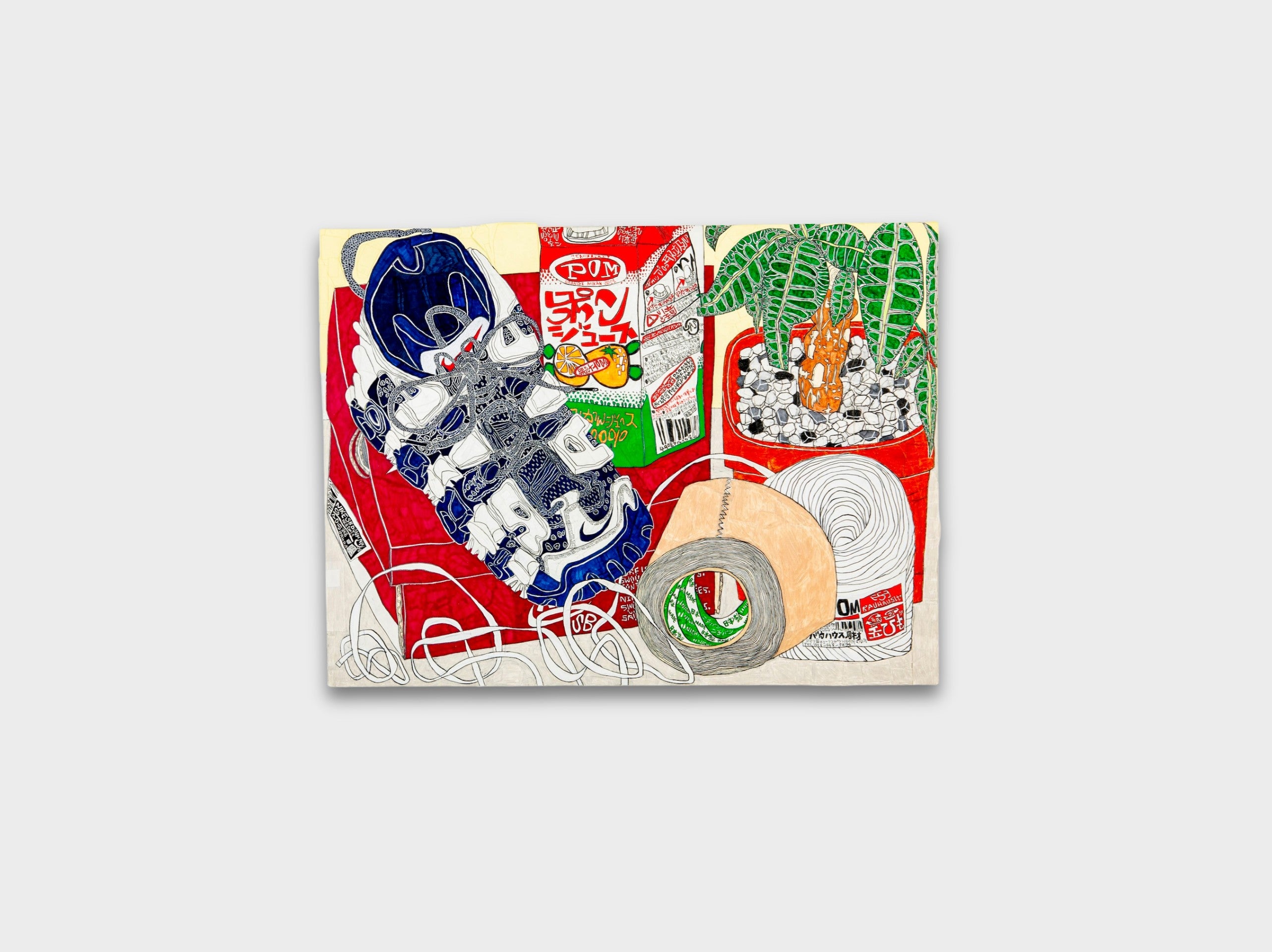
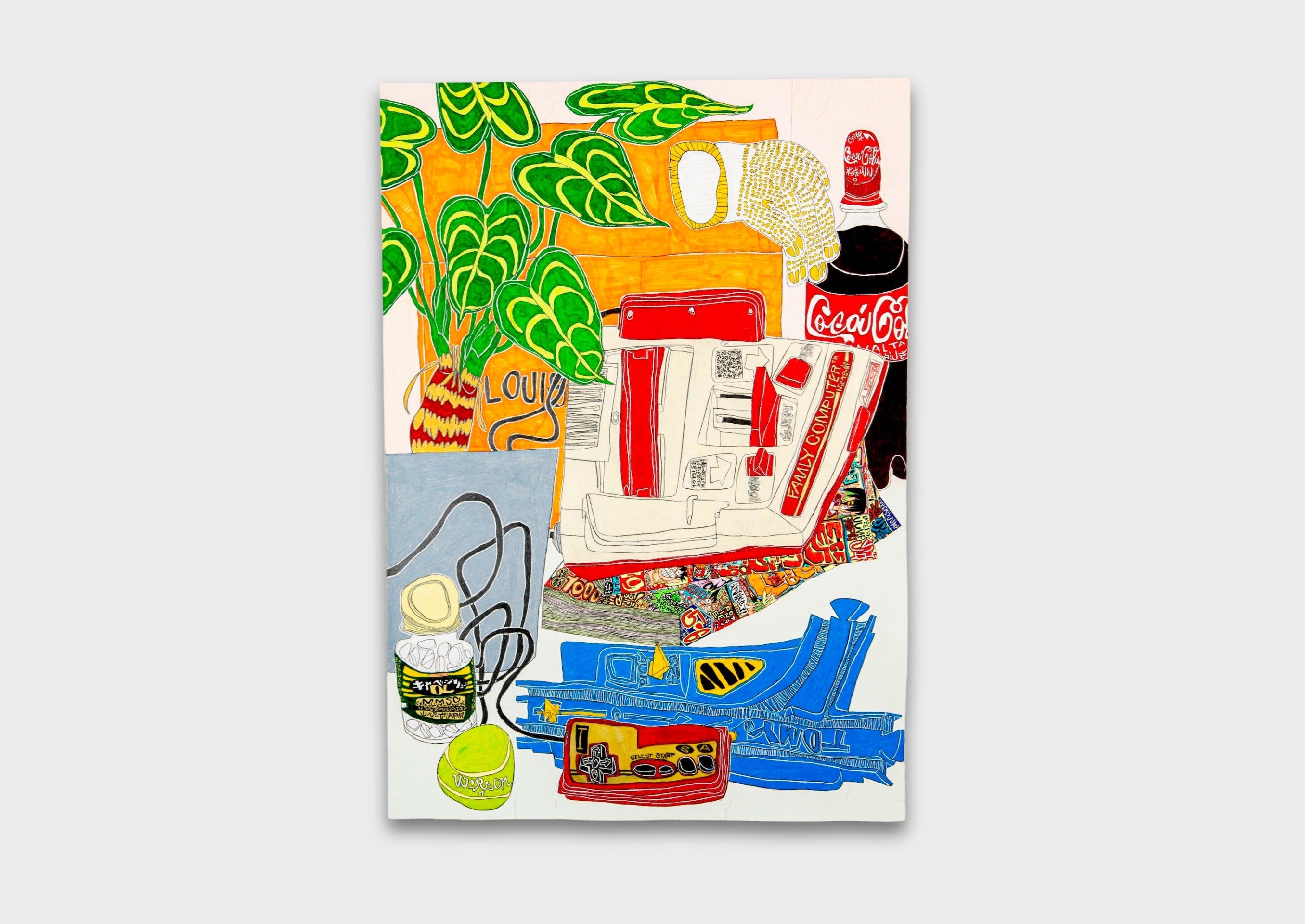

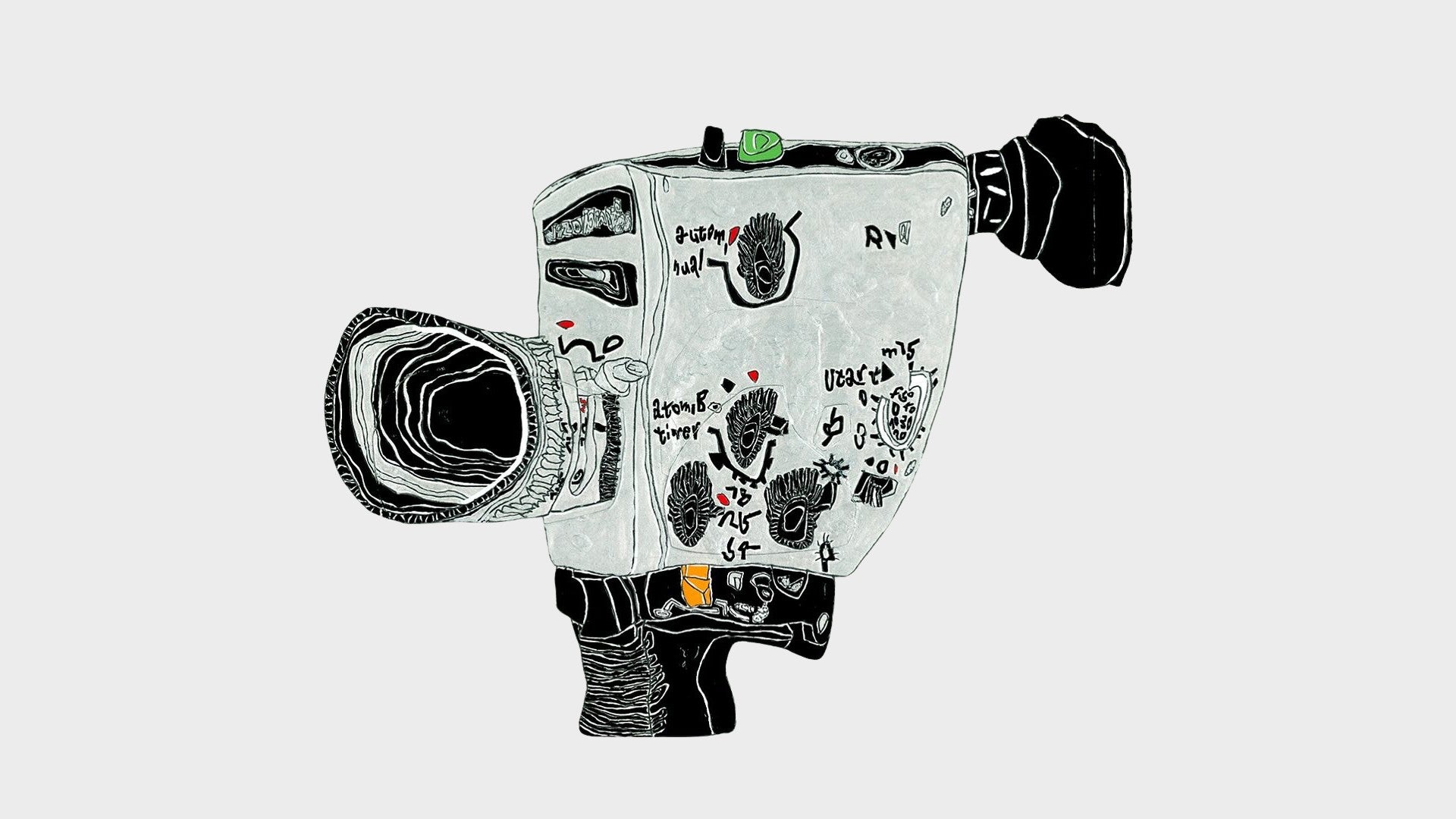
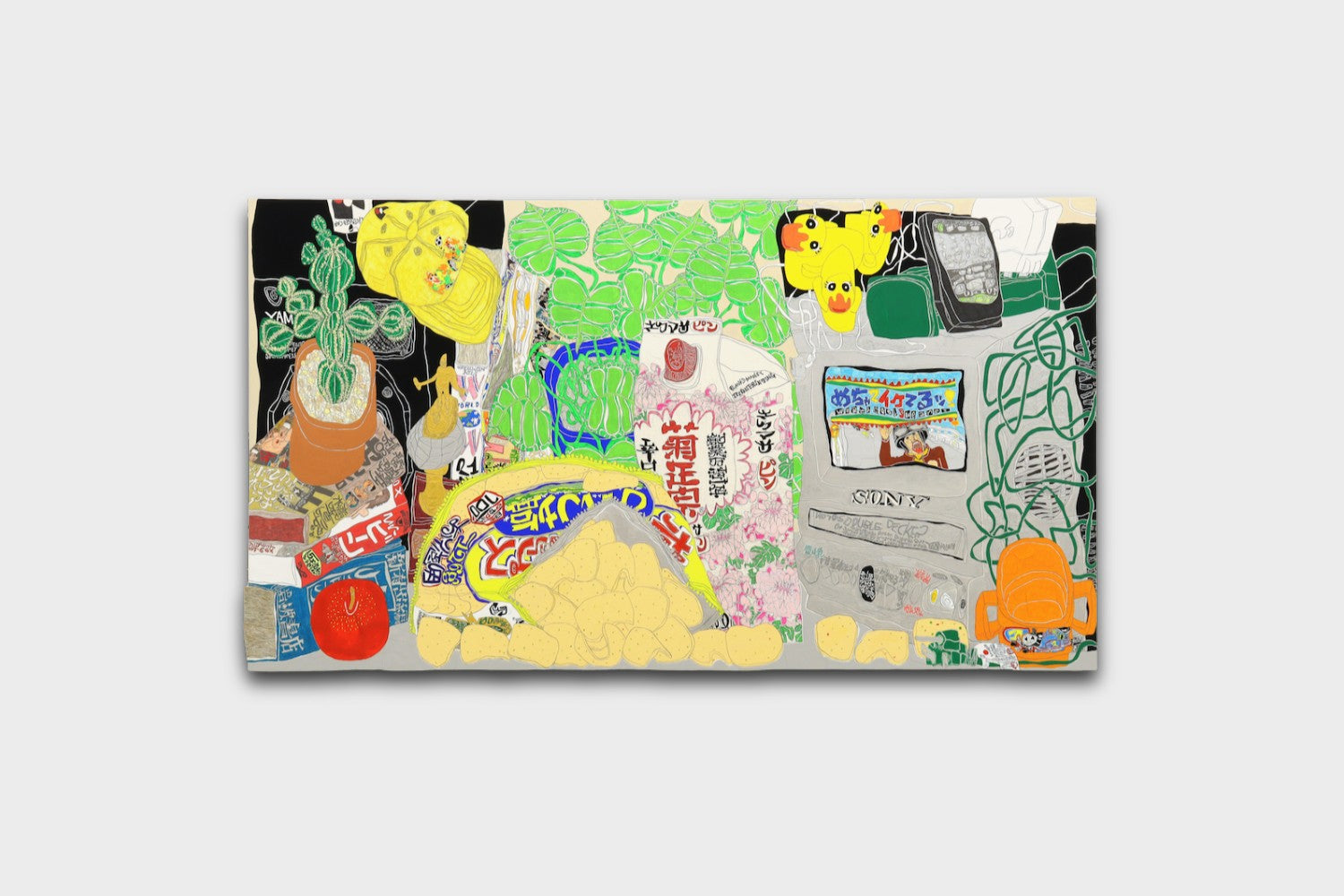
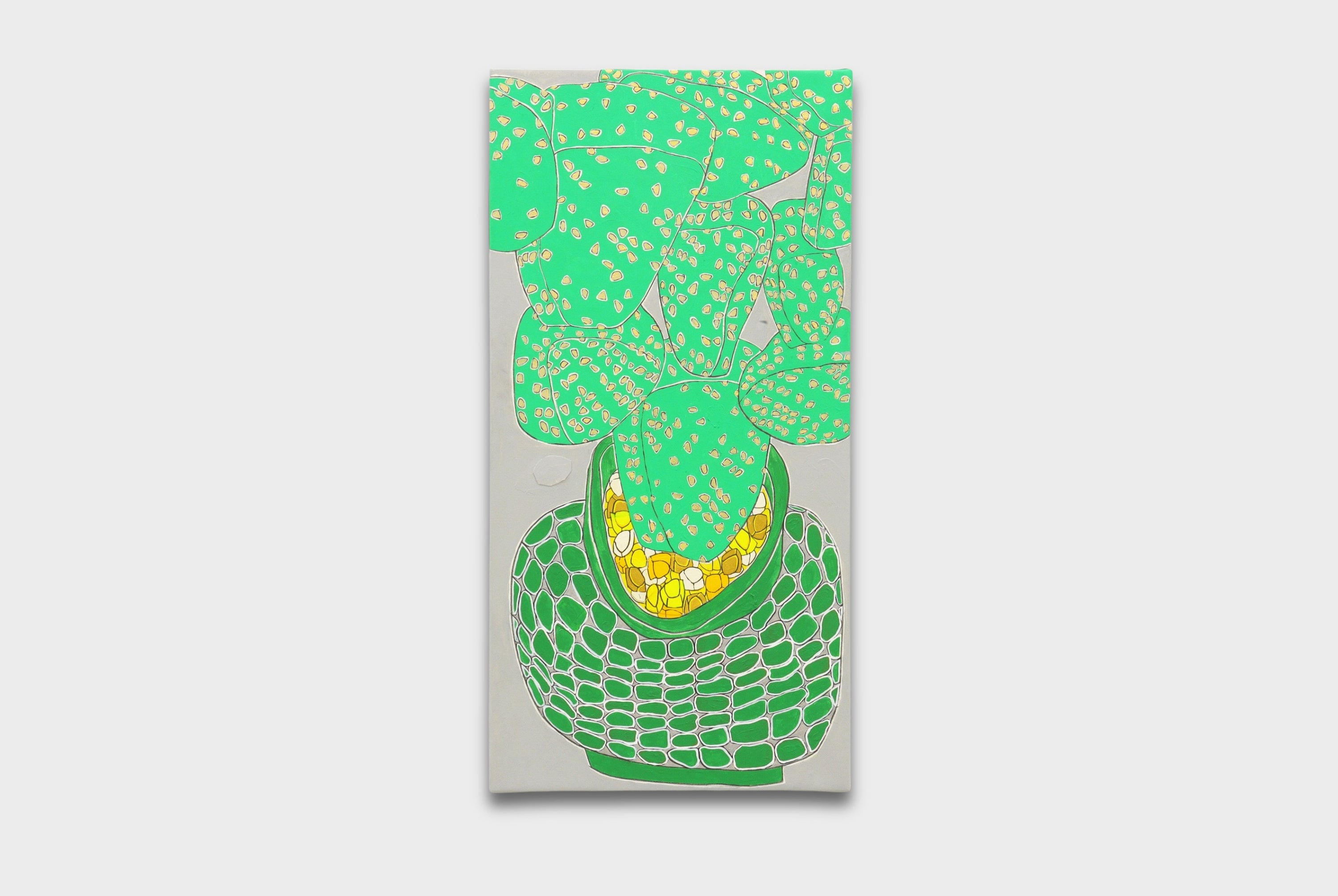
Drawing Feeling, Not Form: A creative process built on intuition, tension, and the electricity of the unexpected
Those wavy lines have become a signature, more than a stylistic choice—they are a thesis. In a country known for minimalist precision and clean design, Ochiai's work feels like a necessary refusal. He’s not interested in clean. He’s interested in feeling. In energy. In expression. In distortion as a way of seeing more clearly. Ochiai’s process embraces this chaos. He doesn’t create with a polished end in mind. Instead, he lets ideas collide, letting form emerge from intuitive marks. “It’s not that I’m going against tradition” he says “sometimes I’m going against my own expectations”.
His canvases often begin as loose sketches—quick gestures made before the mind has time to interfere. What follows is a kind of negotiation between impulse and restraint, layering and erasing until the composition feels alive. Ochiai speaks about this stage like he’s tuning an instrument. Each stroke alters the emotional frequency, pushing the work closer to something honest, even if that honesty is uncomfortable or difficult to articulate. “I don’t want to control everything,” he explains. “I want the painting to surprise me.”
This openness to surprise is part of why his work carries such urgency. There’s a physicality to the way he paints, a sense that he’s channeling rather than constructing. You see it in the warped faces, in the color fields that hum with static, in the outlines that ripple like sound waves. The result is a visual tension that mirrors the internal push and pull of identity, memory, and the shifting meanings of masculinity. Nothing is fixed. Nothing settles. Everything is in motion.


“It’s not that I’m going against tradition, sometimes I’m going against my own expectations.”
Yet beneath the chaos lies a surprising tenderness. His distortion isn’t meant to shock—it’s meant to humanize. By exaggerating the emotional contours of his subjects, Ochiai captures something truer than realism: the way feelings actually take shape inside the body. His paintings make space for that sensory overload, offering viewers a mirror to their own internal distortions. As he continues to evolve, Ochiai shows no interest in simplifying his approach. If anything, he leans further into complexity, exploring how color and form can reveal new emotional resonances.
He talks about future projects with the same restless curiosity that defines his practice—installations that bend space, collaborations that merge digital imperfection with analog warmth, experiments that challenge what a “painting” can be. Through it all, the wavy line remains his compass: a reminder that clarity often comes not from order, but from embracing the beautiful, necessary mess of being human.Ultimately, Ochiai’s work asks us to reconsider how we perceive structure, order, and meaning.
The wavy lines that define his canvases are more than a signature—they are a philosophy, a recognition that life itself rarely moves in straight paths. Through distortion and layering, he captures the way emotions bend perception, how memory fragments and overlaps, and how identity is never fixed but constantly reshaping. His paintings offer a space to sit with tension and ambiguity, to feel rather than analyze, to see the beauty in imperfection. Even as his work becomes more complex and experimental, the core remains: an insistence on intuition, on letting feeling guide form, and on embracing the unexpected.


Warped Reverie: At the intersection of playfulness and tenderness. A visual language that archives memory, longing, and inherited energy
Ochiai’s commitment to analog methods doesn’t feel retrograde; it feels alive. The tactile imperfections of brushstrokes, the subtle smudges, the layering of pencil and paint—all contribute to the sense that the work is breathing, that it exists in real time. Even when scanned, photographed, or printed, the human hand remains visible, asserting a presence that digital perfection can’t replicate. This insistence on materiality reflects a larger philosophy: that creation is an embodied act, inseparable from the person making it, their memories, their impulses, their contradictions.
His work also thrives on ambiguity. Faces emerge from swirls, shapes suggest narratives that might never fully exist, and colors clash in ways that feel familiar yet disorienting. There’s a tension between recognition and estrangement, as though the viewer is glimpsing a memory through a fogged lens. This ambiguity mirrors the internal landscapes Ochiai seeks to explore—emotions that are never singular, recollections that warp over time, and the way nostalgia itself can be both comforting and alien.
At the same time, humor threads through his work, but it’s never superficial. The absurdity in his compositions isn’t a punchline; it’s a lens, a way of confronting the strangeness of lived experience. By juxtaposing playfulness with tenderness, Ochiai allows the viewer to feel the contradictions of life all at once: joy and melancholy, chaos and care, exaggeration and intimacy. The resulting tension makes each piece a kind of emotional map, charting not only what he remembers, but how he remembers it—distorted, magnified, and fully human.
As he continues to experiment, Ochiai’s practice becomes a meditation on what it means to see and be seen. His canvases ask viewers to slow down, to attend to subtle cues, and to consider the elasticity of perception. In a world increasingly obsessed with polish and instant gratification, his analog, memory-laden approach feels radical. By embracing imperfection, embracing distortion, and embracing the unknowable past, Ochiai doesn’t just make art—he constructs a visual archive of experience, one wavy line at a time.


“Chaotic nostalgia, unpacking my own background, those are the themes of my art.”
Though he’s part of a generation increasingly pulled into the digital, Ochiai’s continues to work in the analog. Even when digitized, it feels handmade. He channels the visual overload of early 2000s graphics, combines it with hand-drawn elements, and laces it with memories—half-formed, half-invented. You can see the past in his work, but you’re never quite sure what’s real. That’s the point.
As an artist working in Omiya, Saitama, Ochiai is at the intersection of commercial vibrancy and personal intensity. His work, however, resists easy consumption. It’s playful, yes—but never ironic. It asks the viewer to look through nostalgia, not just at it. His subjects are absurd and tender, messy and deliberate. In a way, Shohei Ochiai is archiving a past that doesn’t fully exist, but should.
In this way, Ochiai not only challenges traditional ideas of precision and mastery in art, but also encourages viewers to reflect on their own internal landscapes, the ways they stretch, warp, and ripple under pressure. In the end, his art becomes a meditation on humanity itself—vibrant, messy, and full of life’s uncontainable energy.
He’s not building a legacy of precision. He’s carving out something much weirder, more human: a visual language for longing, rebellion, and inherited energy. Not a straight line in sight.
EXPLORE


